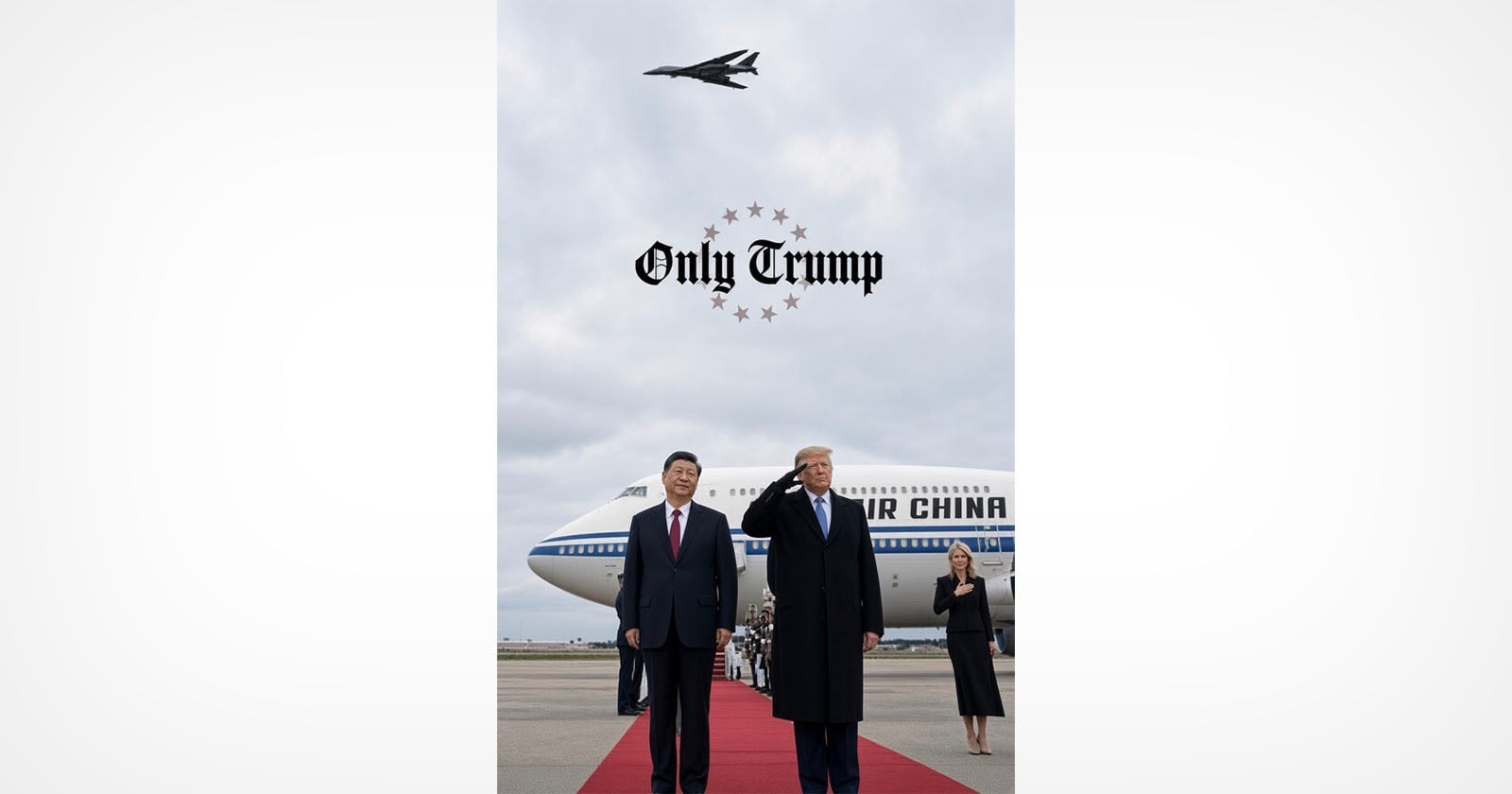
The recent dissemination of a manipulated image by former President Trump on Truth Social, depicting him and President Xi Jinping alongside an Air China plane and a military jet with the superimposed text "Only Trump," is more than just a fleeting digital anomaly. It’s a stark illustration of the escalating intersection of political messaging, image manipulation technology, and the evolving landscape of online authenticity. This incident echoes concerns previously raised in the business world, as seen in the recent case of a CEO’s departure following the publication of an AI-edited family portrait Aspirational Image, Unexpected Exit: CEO Departs After AI Photo, highlighting the potential pitfalls of blurring the lines between reality and fabrication. The ease with which such alterations can be created and distributed, coupled with the speed at which they propagate across social media, presents a significant challenge to discerning truth from artifice.
The deliberate nature of this particular manipulation – the clear insertion of the “Only Trump” tagline – elevates it beyond a simple error or misinterpretation. It underscores a calculated strategy to reinforce a particular narrative, a reinforcement that bypasses traditional journalistic scrutiny and speaks directly to a pre-existing audience predisposed to accept the message. This trend is further complicated by the increasing sophistication of AI-powered image generation tools, making it harder for the average user to detect alterations. The anxieties surrounding the manipulation of visual information are already impacting professional spaces, as evidenced by the tensions observed among photographers outside the White House A Moment of Tension: Photographers Converge Outside the White House. The public's trust in visual media is eroding, and the responsibility for restoring that trust falls on a multitude of actors, from social media platforms to individual content creators. Even seemingly benign features designed to enhance visual presentation, such as Instagram’s new grid integration tool Curate Your Aesthetic: Seamlessly Integrate Tagged Posts to Your Grid, inadvertently contribute to a culture where image perfection and curated aesthetics are prioritized over verifiable reality.
The implications extend far beyond the realm of political discourse. This incident serves as a microcosm of a broader societal shift, where the ability to critically evaluate information, particularly visual information, is becoming increasingly essential. The proliferation of deepfakes and AI-generated content demands a renewed emphasis on media literacy and the development of tools and techniques to detect manipulation. Furthermore, it raises ethical questions about the responsibilities of platforms in policing the content shared on their networks, balancing freedom of expression with the need to safeguard against the spread of misinformation. While complete eradication of manipulated images is likely impossible, proactive measures, including enhanced verification processes and public awareness campaigns, are crucial to mitigating the potential damage.
Looking ahead, the challenge lies not only in detecting manipulated images but also in fostering a culture of skepticism and critical thinking. The ease with which reality can be distorted necessitates a shift in how we consume and share visual content. We must move beyond passively accepting images at face value and instead cultivate a discerning eye, questioning the source, context, and potential motivations behind the creation and dissemination of visual narratives. The question remains: how can we, as a society, adapt to a world where the visual landscape is increasingly constructed rather than captured, and ensure that authenticity and truth remain paramount in an era of unprecedented technological advancement?