A Trick to Make Your Flash so Much Better
Our take
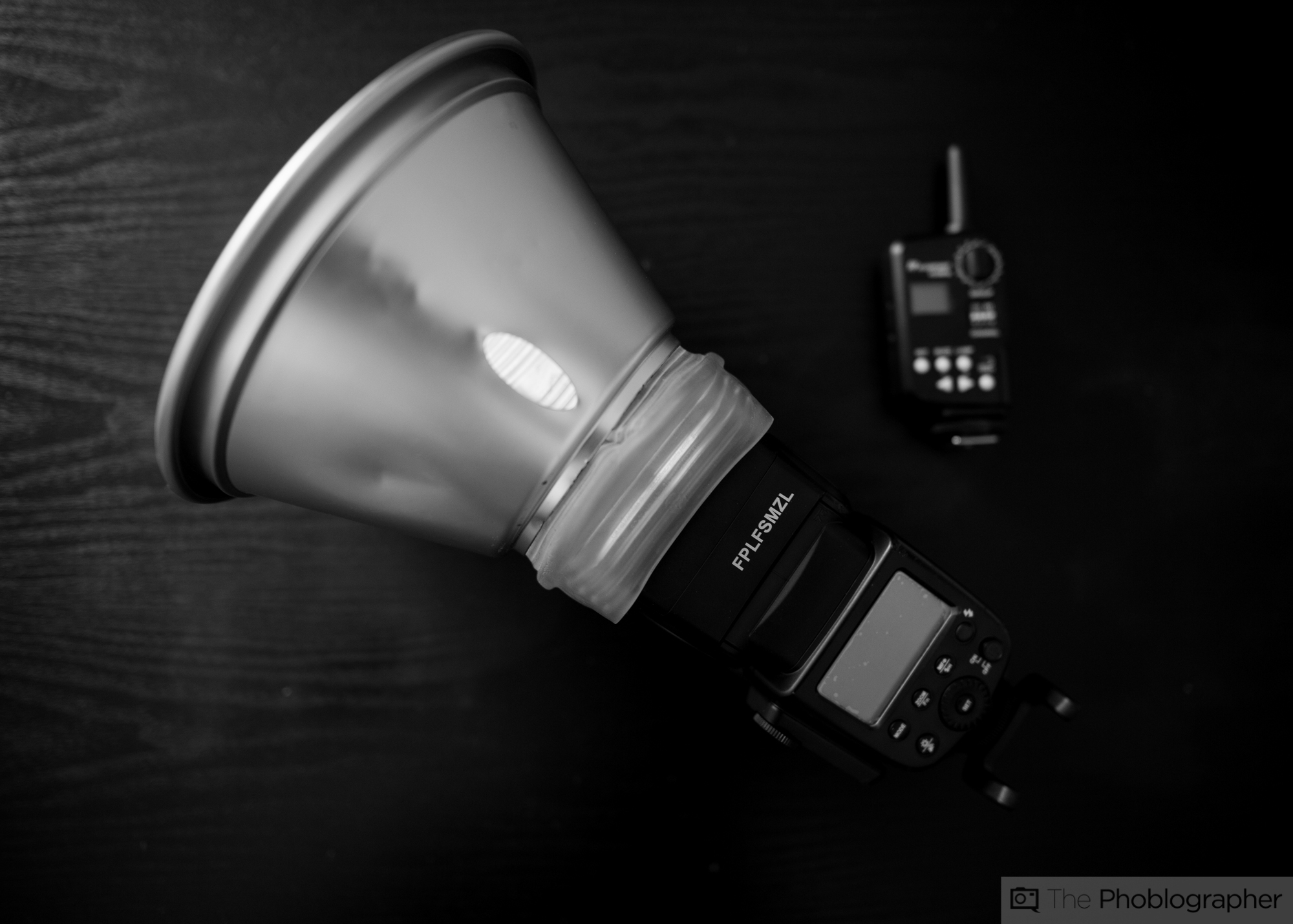
## Our Take: Reclaiming the Umbrella Reflector – A New Era of Accessible Lighting
The recent convergence of accessible radio-triggered hot shoe flashes and the often-overlooked umbrella reflector represents a quietly revolutionary shift in photographic lighting. For years, the nuanced control and beautiful light quality afforded by umbrella reflectors were largely confined to the realm of professional studio setups utilizing larger strobes and monolights. These unassuming tools, essentially a bracket designed to securely hold an umbrella while attached to a light source, offered a unique ability to shape and soften light—creating a distinct conical beam and diffusing harshness in a way that many other modifiers simply couldn't replicate. The barrier to entry, however, was significant: the need for more expensive, powerful lighting equipment. Now, with the proliferation of affordable, radio-enabled hot shoe flashes, that barrier has crumbled, democratizing access to this powerful technique. This isn't just a minor tweak; it’s a re-evaluation of what’s possible with relatively basic equipment, and a welcome reminder that often the most impactful tools are the simplest. For those looking to deepen their understanding of light shaping fundamentals, we recommend exploring Understanding Light Modifiers for a comprehensive overview, and for those just starting their journey, Mastering Off-Camera Flash offers a solid foundation.
The beauty of the umbrella reflector lies in its elegant simplicity. It’s not a complex Fresnel or a multi-faceted softbox; it’s a straightforward redirection and diffusion of light. This simplicity translates to a more natural and pleasing light quality, often exhibiting a softer falloff and a more wrap-around effect than many other modifiers. This is particularly valuable for portraiture, where flattering light is paramount, but its applications extend far beyond. Product photography benefits from the even illumination, while event photography gains a tool for subtly shaping light in challenging environments. The key development enabling this wider adoption is the advancement in hot shoe flash technology. The integration of radio triggers allows photographers to position these flashes remotely, precisely where they’re needed, and sync them seamlessly with their cameras—a feature previously exclusive to more expensive systems. This newfound flexibility, combined with the inherent advantages of the umbrella reflector, creates a compelling proposition for photographers of all levels.
Beyond the practical benefits, this resurgence highlights a broader trend within the photography world: a rediscovery of classic techniques and a move towards more intuitive, less gadget-dependent workflows. In an age saturated with increasingly complex and specialized lighting equipment, the umbrella reflector serves as a refreshing reminder that sometimes the most effective solutions are the simplest and most time-tested. It’s a testament to the ingenuity of photographers who, for decades, have found creative ways to adapt and utilize these tools, and it’s inspiring to see those innovations finally becoming accessible to a wider audience. This shift also encourages a deeper understanding of light itself. Rather than relying on pre-packaged solutions, photographers are prompted to consider how light behaves and how they can actively shape it to achieve their desired aesthetic. For those interested in exploring more foundational lighting concepts, our piece on The Inverse Square Law in Photography provides a crucial understanding of light intensity and distance.
Looking ahead, it will be fascinating to see how photographers continue to experiment with umbrella reflectors and their integration with modern flash technology. We anticipate a surge in creative applications, potentially leading to the development of specialized umbrella reflector designs tailored for specific hot shoe flash models. Will we see manufacturers begin to explicitly market umbrella reflectors designed for hot shoe flash compatibility? Will this renewed interest spur innovation in umbrella materials and coatings to further refine the light quality? The stage is set for a new era of accessible and beautifully shaped light, and the humble umbrella reflector is poised to play a central role.
Read on the original site
Open the publisher's page for the full experience