Alien Jellyfish or Camera Glitch? Experts Debate Odd Photo Taken on Mars
Our take
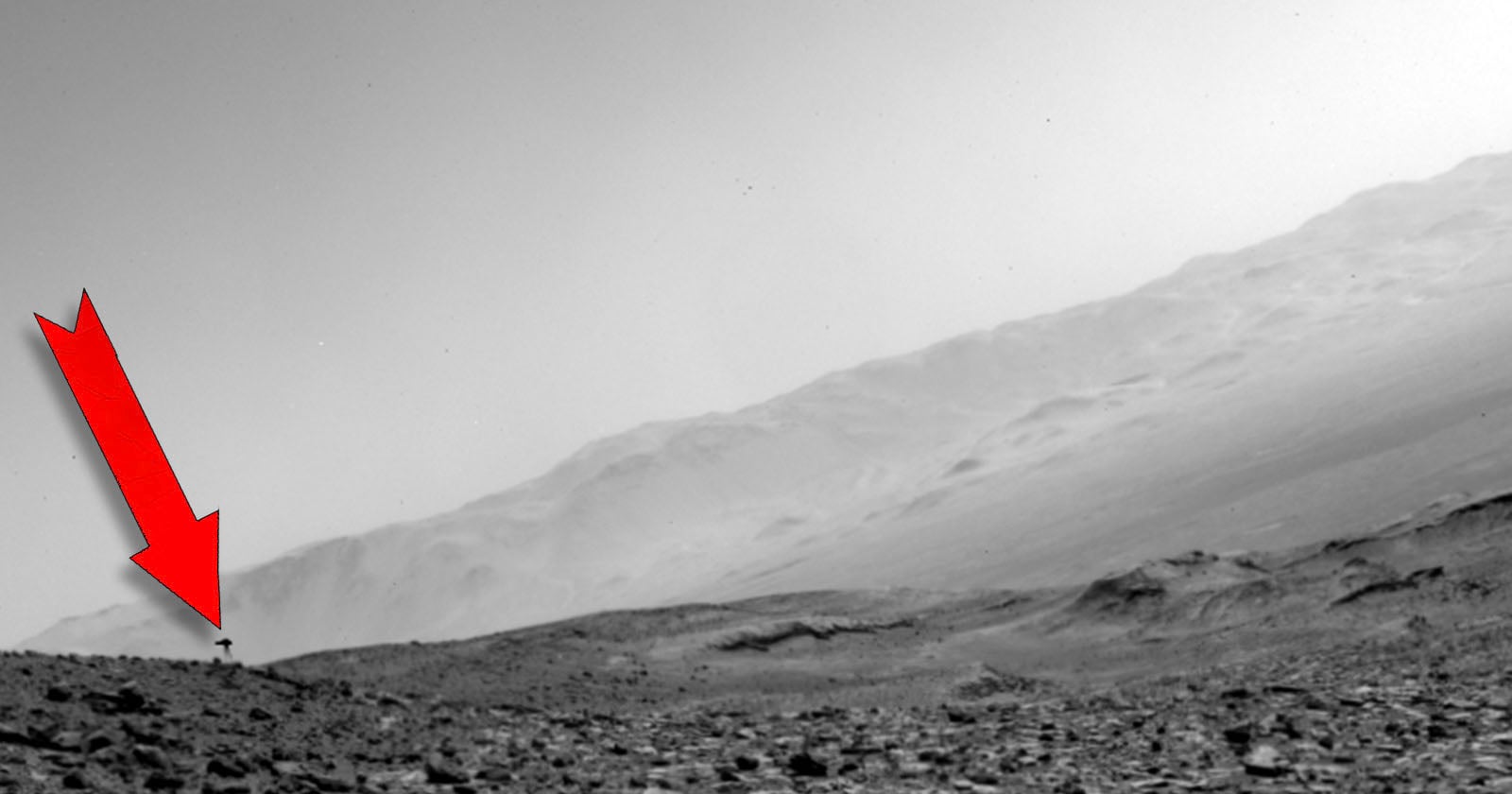
The internet’s latest fascination – a peculiar, T-shaped anomaly spotted in a Mars Curiosity Rover photograph – is a testament to our enduring human desire to find something extraordinary beyond our world. The image, recently resurfaced, sparks a familiar debate: alien life or simply a trick of the light and Martian geology? While the more rational explanation likely lies in the latter, the enduring appeal of the "alien jellyfish" highlights a deeper yearning for discovery and a willingness to entertain possibilities beyond the strictly scientific. This echoes the ongoing discussions within the photographic world regarding image authenticity and manipulation, as evidenced by the recent controversy surrounding [How Photographers’ Images Are Getting Caught Up in the Trade War Between the US and Canada], where seemingly innocuous photographs have taken on unexpected political significance. It's a reminder that images, regardless of their origin, carry weight and are subject to interpretation, often far beyond their initial intent. The debate also connects to the broader questions being asked about image capture technology, exemplified by the recent, somewhat underwhelming, launch of the GoPro Mission 1 Pro ILS, [GoPro Mission 1 Pro ILS Review: A Bit of a Head Scratcher], which underscores the challenges in pushing the boundaries of visual fidelity and functionality.
The core of the debate hinges on the nature of pareidolia – the psychological phenomenon where we perceive familiar patterns in random stimuli. It’s the same impulse that leads us to see faces in clouds or animals in rock formations. The Martian landscape, with its stark contrasts and unusual geological features, provides fertile ground for this kind of perceptual bias. Experts suggest the object could be a rock formation, a shadow cast by a dune, or even a lens flare – all perfectly plausible explanations. However, the narrative of an otherworldly organism is far more compelling, feeding into our collective imagination and the romantic notion of discovering life beyond Earth. This inherent human tendency to find meaning, even where it may not exist, is a fascinating aspect of the discussion. The situation isn't entirely dissimilar to the challenges Eastman Kodak faces in reviving its film business, requiring both technological innovation and a careful cultivation of nostalgic appeal, as demonstrated by [Eastman Kodak Gets a UK Distributor for its Rebranded Films]. Both scenarios involve navigating perception and expectation, presenting a unique set of marketing and scientific challenges.
The significance of this seemingly minor incident extends beyond the immediate debate about the "alien jellyfish." It underscores the vital role of robotic exploration in expanding our understanding of the universe and pushing the boundaries of scientific inquiry. Each photograph sent back from Mars, regardless of its perceived strangeness, contributes to a growing dataset that scientists can use to map the planet's surface, analyze its composition, and search for signs of past or present life. Furthermore, the public's engagement with these images – the sharing, the speculation, the debates – fuels public interest in space exploration and inspires the next generation of scientists and engineers. It's a beautiful illustration of how scientific discovery and popular culture can intersect, creating a shared sense of wonder and excitement. The meticulous work of analyzing these images, separating genuine anomalies from optical illusions, requires a blend of scientific rigor and creative problem-solving, a skillset increasingly valuable in a world saturated with visual information.
Ultimately, the "alien jellyfish" photo serves as a potent reminder of the vastness of the unknown and the inherent limitations of our perception. While a definitive answer may never be reached, the ongoing discussion is a valuable exercise in critical thinking and scientific inquiry. What will be the next unexpected detail to emerge from the Martian landscape, and how will we interpret it? Will advancements in image processing and AI analysis finally allow us to definitively rule out the possibility of life beyond Earth, or will they only reveal new, equally intriguing mysteries? The exploration of Mars continues, and with it, our ongoing quest to understand our place in the cosmos.
A photo taken by the Mars Curiosity Rover a few years ago has resurfaced online, and that's because it shows something strange on the horizon.
Read on the original site
Open the publisher's page for the full experience