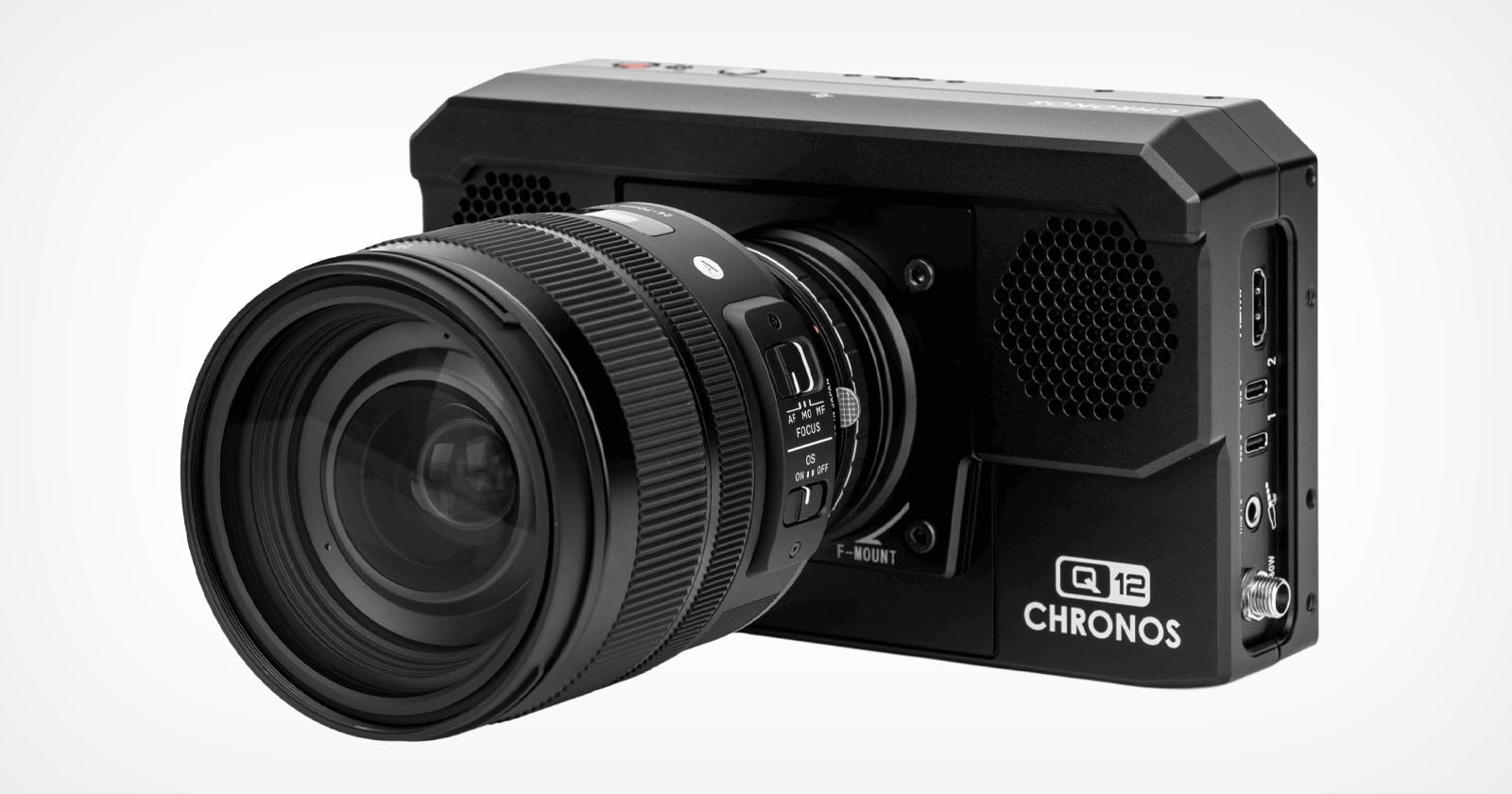
The relentless pursuit of capturing fleeting moments with ever-increasing clarity continues, and Kron Technologies’ Chronos Q12 camera represents a significant leap forward in that endeavor. Boasting the ability to record 2.5K resolution at an astonishing 7,500 frames per second, the Q12 isn't simply about capturing more frames; it’s about revealing details previously invisible to the naked eye. This technology aligns with a broader trend we’ve been observing, from the advancements in mobile imaging showcased in Elevated Mobile Imaging: Snapdragon Unleashes 8K Video Capabilities to the stunning detail captured in the works of landscape photographers recognized in Authentic Landscapes: The Natural Landscape Photography Awards Winners, demonstrating an increasing demand for fidelity and precision in visual representation. The Q12’s capabilities suggest a future where even the most ephemeral events can be meticulously documented and analyzed.
The implications of such high-speed imaging extend far beyond the realm of casual photography. Consider the potential applications in scientific research, industrial quality control, and even artistic expression. Imagine capturing the precise mechanics of a hummingbird’s wings in flight, or analyzing the micro-fractures in a material under stress. The ability to slow down time to this degree opens up entirely new avenues for understanding the world around us. It's also a natural progression from the advancements seen in professional cinema, with cameras like the Sony FX5, though with a different focus, still requiring meticulous planning and execution; the Q12 simplifies this process by providing an extraordinary level of detail capture almost instantaneously. The APS-C sensor size provides a sweet spot between portability and image quality, making it a versatile tool for various applications. While the price point will likely place it outside the reach of the casual consumer, its impact on specialized fields is undeniable.
What truly sets the Chronos Q12 apart isn't just the frame rate, but the resolution maintained at that speed. Many high-speed cameras sacrifice image quality to achieve rapid capture, resulting in grainy or low-resolution footage. Kron’s claim of 2.5K resolution at 7,500fps suggests a sophisticated engineering achievement. This level of detail will be crucial for applications requiring precise analysis, allowing researchers and engineers to identify subtle patterns and anomalies that would otherwise be missed. Furthermore, the ability to capture such nuanced data creates exciting possibilities for creative professionals looking to push the boundaries of visual storytelling. It allows for a level of control and manipulation previously unattainable, opening doors to entirely new artistic techniques and visual effects.
Looking ahead, the development of the Chronos Q12 compels us to consider the evolving relationship between technology and perception. As cameras become increasingly capable of capturing the unseen, how will this impact our understanding of time, motion, and the very nature of reality? Will we develop new aesthetic languages to interpret this wealth of visual information? And perhaps most importantly, as we gain the ability to dissect and analyze even the most fleeting moments, what ethical considerations will arise regarding privacy and the potential for manipulation? The Chronos Q12 isn't just a camera; it’s a window into a future where the boundaries of what we can see, and what we can know, are constantly being redefined.