Honor’s AI-Powered, Gimbal-Equipped Robot Phone Just Launched in China and it Looks Wild
Our take

The launch of Honor’s Robot Phone in China isn't just a quirky tech novelty; it’s a bold statement about the future of mobile photography and a fascinating intersection of hardware and artificial intelligence. When companies tease ambitious projects, skepticism is understandable, but Honor has delivered a tangible, albeit unusual, device. The sheer audacity of integrating a mechanical gimbal directly into a smartphone is striking, moving beyond software-based stabilization to offer a genuinely physical solution for smoother video capture. This echoes a broader trend within the mobile space, exemplified by Google’s recent unveiling of the Pixel 11 Phones Features Major Camera Upgrades Google’s Redesigned Pixel 11 Phones Features Major Camera Upgrades, where camera capabilities remain a central battleground for innovation. It also subtly reminds us of past concerns surrounding data security and hardware origins, as highlighted by the recent revelation that cameras on Chinese-made drones used by the UK Royal Navy secretly sent data to China Cameras on Chinese-made drones used by UK Royal Navy Secretly Sent Data to China, prompting reflection on the broader geopolitical implications of technological dependence.
The mechanical gimbal, coupled with Honor’s AI integration, represents a significant departure from the incremental improvements we've seen in smartphone cameras. While Apple has occasionally teased potential technological leaps, often only to withhold them, Honor is actively showcasing a radical reimagining of the mobile camera system. The extendable gimbal not only provides superior stabilization but also likely allows for a larger sensor and lens configuration than would otherwise be possible within the confines of a smartphone chassis. This aligns with a growing demand for professional-grade video capabilities in consumer devices – a desire fuelled by the rise of content creation and social media platforms. The question now becomes whether the added bulk and complexity of the gimbal will be a worthwhile trade-off for consumers, and whether the AI processing can truly elevate the captured footage beyond what’s achievable with existing computational photography techniques.
Beyond the technical specifications, the Honor Robot Phone’s launch speaks to a broader cultural shift within the Chinese tech market. There’s a greater willingness to embrace experimentation and push boundaries, often with a focus on delivering unique user experiences. This contrasts with the more cautious approach sometimes seen in Western markets, where innovation is often tempered by concerns about market risk and established design paradigms. Honor’s willingness to release such a visually striking and functionally unconventional device demonstrates a confidence in its ability to capture a segment of the market eager for something different. It's a reminder that the mobile landscape is far from settled, and that disruptive technologies can emerge from unexpected places. The device’s design—a functional aesthetic—also aligns with a growing appreciation for blending technology with artistry, a theme consistently present in design-forward brands.
Ultimately, the Honor Robot Phone’s success hinges on its ability to deliver on its promises. Can the gimbal provide a genuinely noticeable improvement in video quality? Is the AI integration seamless and intuitive? And, perhaps most importantly, will consumers embrace the device’s distinctive design and added complexity? The launch is undeniably a fascinating experiment, and one that warrants close observation. It raises a compelling question: will other manufacturers follow Honor’s lead and explore increasingly unconventional hardware solutions to differentiate their smartphones, or will this remain a niche offering?
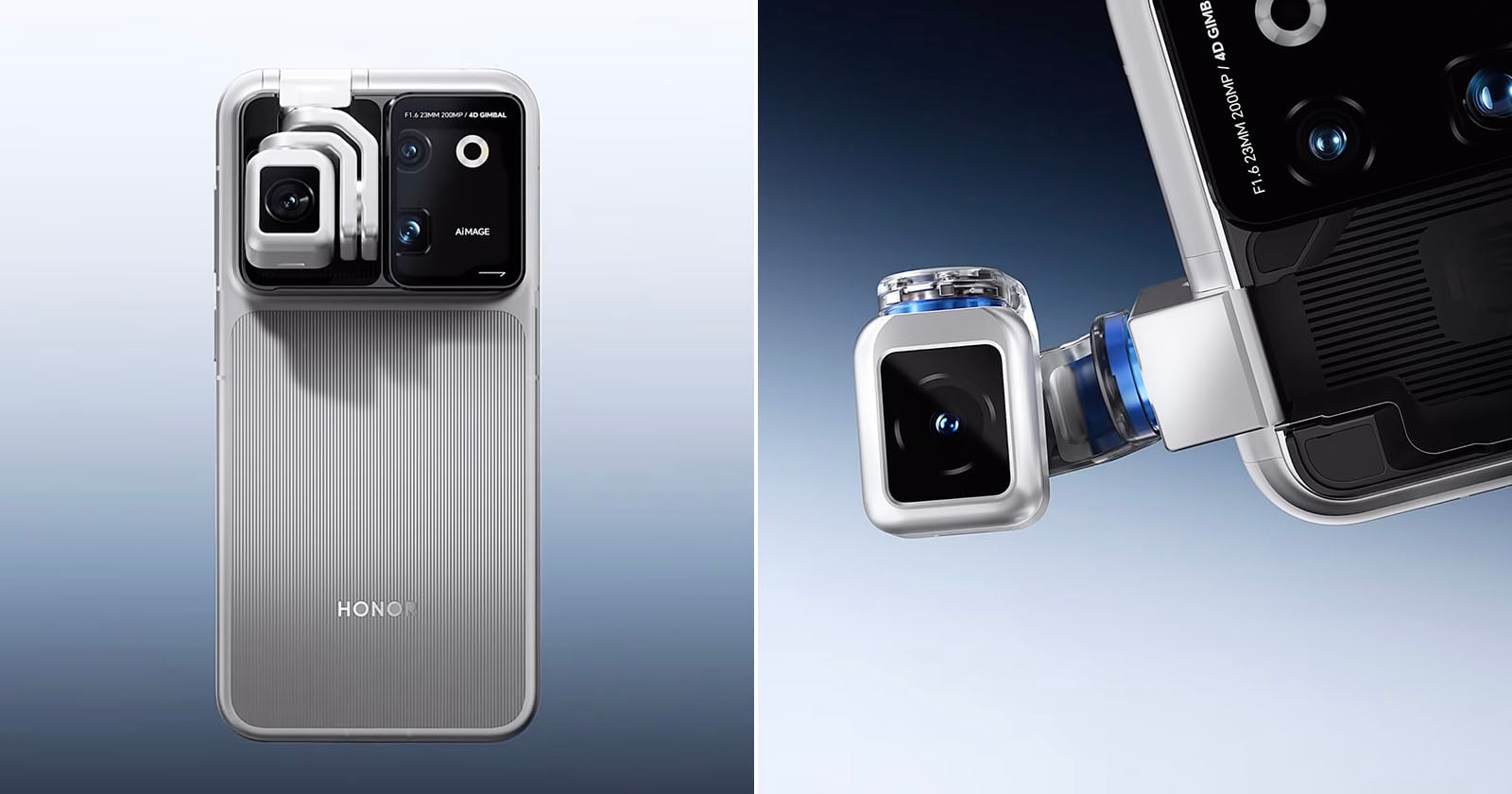
When Honor first announced that it was developing the gimbal-equipped Robot Phone last fall, it seemed like a far-fetched idea that might ultimately stay in the realm of a prototype. Companies are always coming up with wild ideas, only some of which ever reach market. Well, the Honor Robot Phone is very real, and it just launched in China.
Read on the original site
Open the publisher's page for the full experience