NASA’s New $4.3 Billion, 300MP Space Telescope Passed its First Tests One Million Miles Away
Our take
## Our Take: A New Era of Cosmic Discovery Dawns with Roman Telescope’s Initial Success
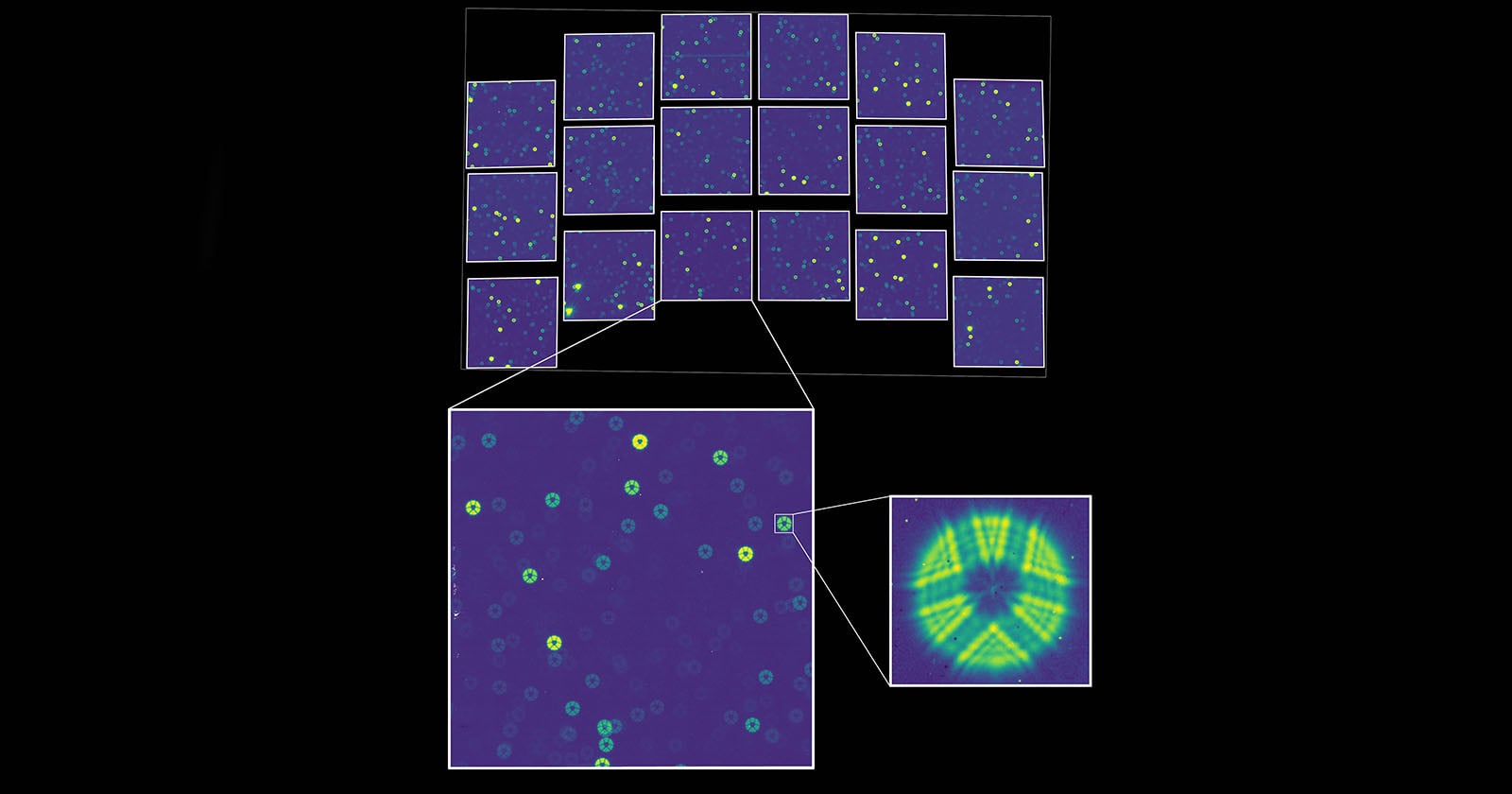
The cosmos has always beckoned, a canvas of infinite wonder and unanswered questions. Now, with the successful completion of initial tests for NASA’s Nancy Grace Roman Space Telescope – affectionately known as Roman – we stand on the precipice of a truly remarkable era of astronomical discovery. The telescope, a staggering $4.3 billion investment, represents a paradigm shift in how we observe the universe, moving beyond the focused gaze of instruments like Hubble to a sweeping, panoramic view. Its Wide Field Instrument (WFI), capable of capturing images with an unprecedented 300-megapixel resolution, has already begun its testing procedures one million miles from Earth, a testament to the ingenuity and precision of modern engineering. This isn’t merely a technological achievement; it’s a gateway to understanding the universe’s fundamental structures and processes with a clarity previously unimaginable. For those fascinated by the intricacies of space exploration, we recently explored The James Webb Telescope's Latest Discoveries and how it’s reshaping our understanding of exoplanets, providing valuable context for appreciating the unique capabilities of Roman. Furthermore, understanding the history of space telescopes is essential; consider our piece on The Evolution of Space Telescopes.
The significance of Roman’s WFI lies in its ability to survey vast swaths of the sky, allowing astronomers to map the distribution of dark matter, study the expansion of the universe with unprecedented accuracy, and identify billions of galaxies. Unlike Hubble, which focuses on smaller areas with high detail, Roman is designed for wide-field surveys, essentially creating a cosmic census. This approach is particularly crucial for understanding dark energy, the mysterious force driving the accelerating expansion of the universe, and for probing the nature of dark matter, which makes up a significant portion of the universe's mass but remains largely invisible. The initial tests, demonstrating the WFI’s ability to function flawlessly at the distant Lagrange point L2, are a critical validation of the telescope’s design and a harbinger of the groundbreaking discoveries to come. The sheer scale of the data Roman will generate presents both an opportunity and a challenge, requiring innovative data processing techniques and collaborative efforts from astronomers worldwide.
Beyond the purely scientific implications, the Roman Space Telescope embodies a spirit of human ambition and a relentless pursuit of knowledge. It reflects our innate desire to explore the unknown, to push the boundaries of what’s possible, and to unravel the mysteries of our place in the universe. The collaborative nature of this project, involving scientists and engineers from across the globe, underscores the power of international cooperation in advancing scientific frontiers. The images captured by Roman will undoubtedly inspire future generations of scientists, engineers, and explorers, sparking a renewed interest in space exploration and fostering a deeper appreciation for the beauty and complexity of the cosmos. The potential for unexpected discoveries is immense; Roman could reveal entirely new phenomena that challenge our current understanding of physics and cosmology.
Looking ahead, the true test of Roman will be its ability to consistently deliver high-quality data and to withstand the harsh conditions of space over its planned operational lifespan. While the initial tests are extremely encouraging, ongoing monitoring and maintenance will be crucial for ensuring its long-term success. We’ll be closely watching the first full-scale surveys, eagerly anticipating the deluge of data that will reshape our understanding of the universe. Perhaps the most compelling question is: what unexpected revelations will Roman unveil, and how will these discoveries challenge our current cosmological models? The journey of discovery has just begun, and the universe is waiting to reveal its secrets.
NASA's new 300-megapixel telescope, the Nancy Grace Roman Space Telescope, launched on August 30, 2026. NASA says Roman's Wide Field Instrument (WFI) has been woken up to begin testing procedures one million miles away from Earth at the second Lagrange point, better known as L2.
Read on the original site
Open the publisher's page for the full experience