Photographer Captures Rare Shot of Venus and the ISS Together in One Frame
Our take

The cosmos continues to offer moments of breathtaking beauty, and photographer AJ Smadi’s recent capture of the International Space Station (ISS) and Venus in the same frame serves as a poignant reminder of the delicate dance between human ingenuity and the vastness of the universe. This marks the second time Smadi has achieved this rare feat, solidifying his position as a keen observer and a skilled chronicler of celestial events. It’s a testament to the power of patience, precise timing, and a deep appreciation for the extraordinary occurring within the ordinary. The ability to document such fleeting moments speaks to a broader trend in photography—the intersection of technology, artistry, and our innate fascination with exploration, echoing themes explored in articles like [What Makes These 5 Nikon Cameras Special in 2026?]—a reminder that even the most advanced equipment requires a discerning eye and a thoughtful approach to capture truly exceptional images. Indeed, the surge in citizen science and accessible photography tools presents exciting opportunities for recording events previously limited to professional astronomers.
The significance of this image extends beyond its aesthetic appeal. It encapsulates a powerful narrative about our place in the universe: a human-built structure, the ISS, orbiting our planet, briefly aligning with a neighboring celestial body, Venus, a world of intense heat and shrouded mystery. While the image itself is blurred, a characteristic of photographing fast-moving objects against a bright background, it evokes a sense of scale and wonder. It prompts reflection on the sheer improbability of our existence and the remarkable efforts humankind undertakes to understand and interact with the cosmos. This pursuit of understanding is increasingly intertwined with technological advancements, as highlighted in [Nvidia’s AI Video Detector Sounds Like the Tool the World Desperately Needs]— demonstrating a parallel desire to both observe and interpret the world around us, whether it's on Earth or beyond. The technical challenges involved in capturing this image, requiring precise calculations and rapid response, also underscore the essential role of skilled photographers in bridging the gap between scientific discovery and public understanding. It’s a visual representation of humanity’s ongoing quest to explore and document the unknown.
The resurgence of interest in space exploration, fueled by both governmental and private initiatives, is creating more opportunities for these kinds of fleeting observations. As space tourism becomes increasingly viable and more satellites populate Earth's orbit, the potential for capturing unique juxtapositions of human technology and natural phenomena increases exponentially. This, in turn, generates a new wave of visual storytelling, moving beyond traditional astronomical imagery to encompass a more human-centric perspective on space. The increasing accessibility of high-quality photography equipment, as explored in [First Amendment Auditors are Taking Their Right to Film in Public to the Extreme], further democratizes this process, empowering anyone with the right tools and mindset to contribute to our collective understanding of the universe. Smadi’s work exemplifies this shift, demonstrating how individual passion and technical skill can produce images that resonate with a global audience.
Looking ahead, it’s intriguing to consider how advancements in AI and computational photography might further enhance our ability to capture and interpret these celestial moments. Could future algorithms compensate for the blurring inherent in capturing fast-moving objects, allowing us to see even more detail in these fleeting alignments? Will citizen scientists, equipped with increasingly sophisticated tools and AI-powered assistance, become the primary chroniclers of space phenomena? The intersection of art, science, and technology promises a future filled with even more awe-inspiring images and a deeper appreciation for the intricate tapestry of the cosmos. The question remains: what other unexpected connections between human endeavors and the natural universe will photographers, both amateur and professional, uncover next?
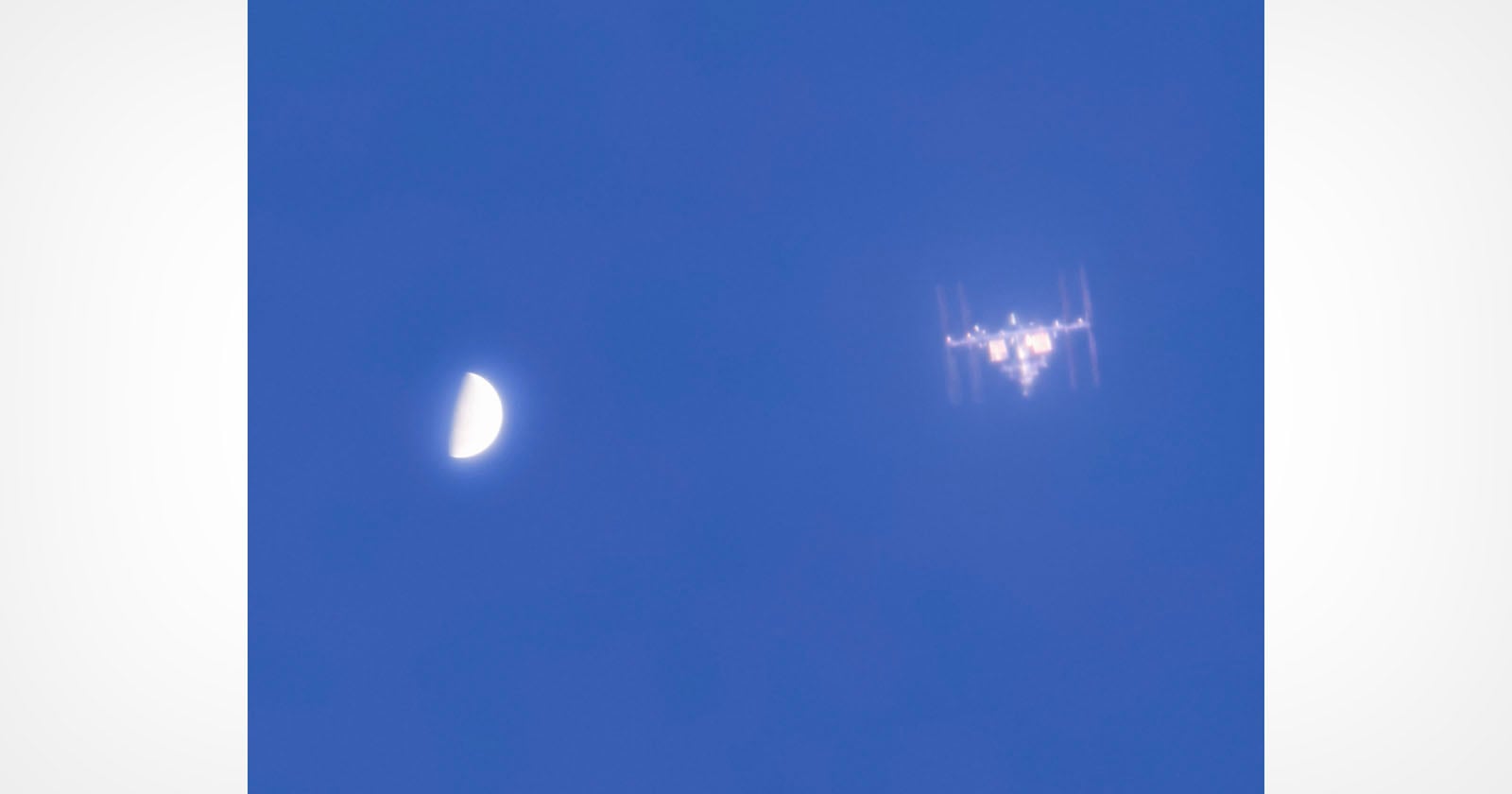
Photographer AJ Smadi has captured the second-ever photograph of the International Space Station (ISS) and Venus in the same frame -- he also captured the first one.
Read on the original site
Open the publisher's page for the full experience