The Nano Banana AI Image Generator Has Arrived in Google Earth
Our take
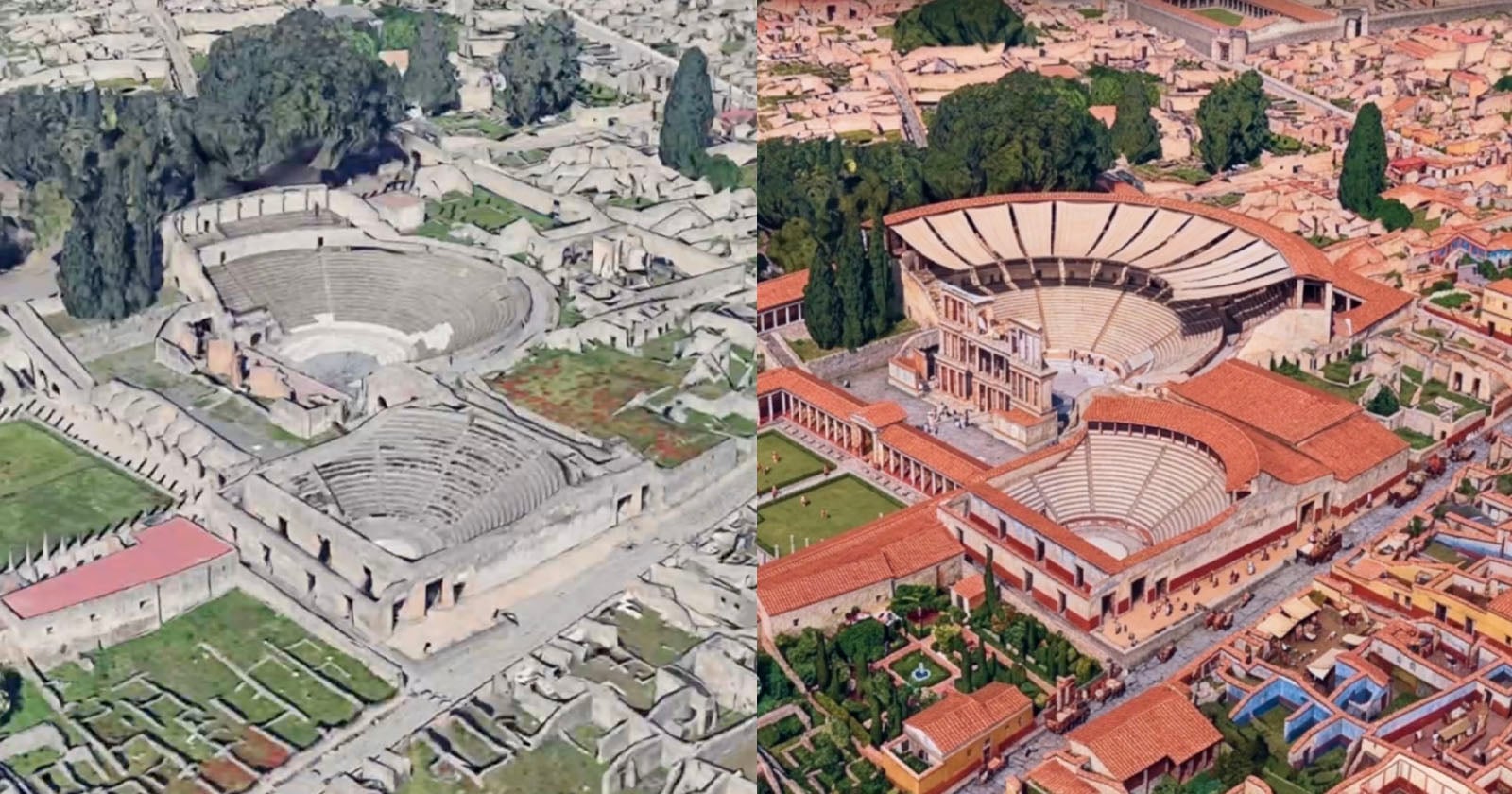
The integration of Nano Banana’s AI image generator into Google Earth represents a fascinating, and potentially transformative, moment for both digital exploration and historical understanding. It’s easy to dismiss this as a novelty – a fun way to conjure up Victorian-era London or a futuristic Tokyo over familiar landscapes – but the implications run far deeper. We’ve seen the increasing sophistication of AI image generation, as highlighted in [This Image Isn’t AI. But I Wouldn’t Blame You if You Thought it Was], where the line between reality and synthetic creation blurs to an astonishing degree. This isn’t simply about adding a stylistic filter; it’s about reconstructing entire visual narratives based on available data, opening up entirely new avenues for education and even entertainment. Considering the ongoing legal battles surrounding AI’s role in creative fields, as exemplified by [Elon Musk’s xAI Sues Minnesota Days Before State Ban on AI Nudification Apps], the ethical considerations surrounding the use of AI to essentially rewrite history within a platform like Google Earth are crucial and deserve careful scrutiny.
The beauty of this development lies in its accessibility. Previously, visualizing historical landscapes or imagining future urban environments required the expertise of historians, architects, and specialized 3D modelers. Now, with a few clicks, anyone can conjure up alternative realities layered onto the familiar geography of Google Earth. This democratizes historical research and imaginative exploration in a way we haven’t seen before. The sheer scale of data that Meta is processing, as detailed in [Meta Says It Has Scanned Every Single Public Instagram Post With its AI], underscores the importance of data governance and algorithmic transparency. While the Nano Banana integration doesn’t directly mirror Meta’s practices, it highlights the broader trend of leveraging massive datasets to generate increasingly sophisticated AI outputs, and reinforces the need for ongoing dialogue about responsible AI development. The ability to instantly visualize Pompeii as it might have appeared before the eruption, or to project a plausible scenario for coastal cities facing rising sea levels, instantly elevates Google Earth from a navigational tool to a dynamic educational platform.
However, it's imperative to acknowledge the potential for misuse and the inherent subjectivity of these AI reconstructions. Nano Banana's algorithms are trained on existing datasets, which are themselves products of human interpretation and potential biases. Reconstructions should not be presented as definitive historical truths, but rather as informed visualizations – “what ifs” grounded in available evidence. The risk of perpetuating inaccuracies or reinforcing harmful narratives is real, and Google will need to implement safeguards to ensure responsible usage and clearly communicate the speculative nature of these AI-generated overlays. The visual power of this technology makes it a potent tool, and with that power comes a significant responsibility to ensure accuracy and transparency. The temptation to create idealized or even propagandistic representations of the past will be strong, and resisting that temptation will be crucial to maintaining the platform’s integrity.
Looking ahead, the integration of AI image generation into Google Earth signals a broader shift towards augmented reality experiences, where the digital and physical worlds increasingly intertwine. We can anticipate further refinement of these AI models, allowing for even more nuanced and accurate reconstructions. The real question is not just *what* we can visualize, but *how* we choose to use this technology to understand our past, shape our present, and envision our future. Will we leverage it to foster empathy, promote historical literacy, and inspire creative problem-solving, or will we succumb to the temptation of distortion and manipulation? The answer to that question will largely determine the legacy of this groundbreaking integration.
Google has added the Nano Banana AI image generator to Google Earth, allowing users to visualize the area they're viewing in various styles or eras.
Read on the original site
Open the publisher's page for the full experience