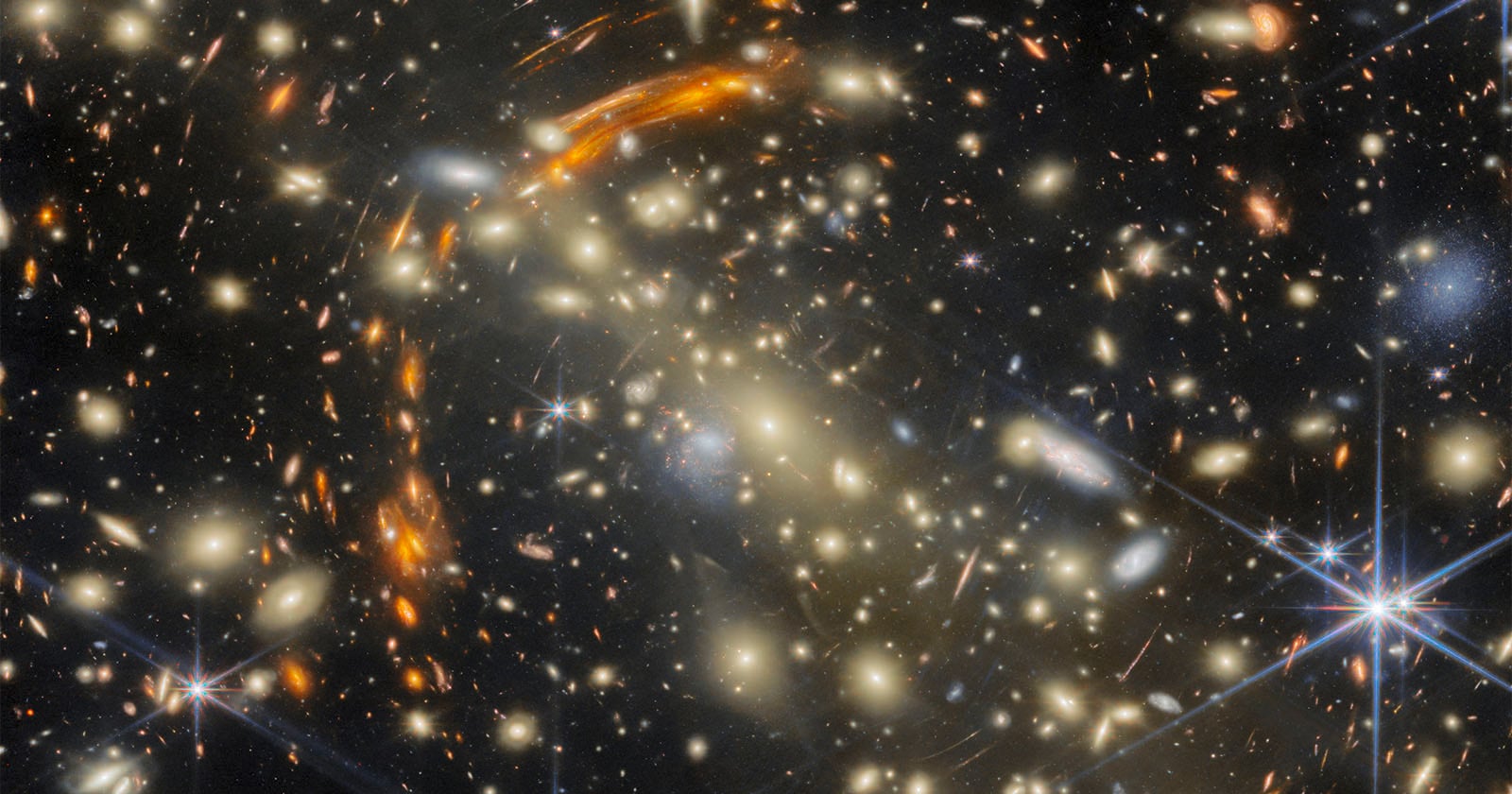
The James Webb Space Telescope has just handed us a new Picture of the Month, and it is not merely another pretty frame. It is among the most powerful examples of gravitational lensing ever captured, a cosmic accident that bends light into glowing arcs and smears distant galaxies across the void. For us, this is not just an astronomical curiosity. It is a reminder that the most compelling images are rarely the ones we see head-on; they are the ones where something invisible shapes what we perceive. That is a lesson that translates directly from deep space to your own creative practice, whether you are composing a photograph, designing a set, or curating a mood board.
The image works because it embraces distortion as a feature, not a flaw. The curved streaks of light are not imperfections; they are the signature of gravity doing its quiet, monumental work. This is the same principle behind the tilt-shift artistry we have been watching from Venus Optics, where the goal is to control perspective and depth in ways that mimic our own selective focus. And it echoes the argument we have made about the elegant power of what we leave unseen in every frame. Webb is not showing us everything, because it cannot. The very structure of the universe makes sure of that. What we get instead is a curated glimpse, a version of reality that is both truthful and profoundly subjective. That is the same tension you navigate every time you decide what stays in the frame and what falls away.
What makes this image so striking is not just the science, though the science is staggering. It is the aesthetic confidence to let the chaos stand. The brightest stars flare with diffraction spikes, the galaxies cluster in a dense field of color, and the arcs bend like brushstrokes on a canvas. It feels like art because it is, but not in the way we usually mean. The artist here is nature, and the medium is spacetime itself. That is why we find ourselves drawn to this image, not just as a technical achievement but as a piece of visual storytelling. It asks us to accept that beauty often arrives sideways, bent by forces we cannot see, and that the most immersive experiences are the ones that do not pretend to be simple.
Our take is straightforward: this image is a masterclass in letting the medium speak. It does not need a filter or a preset to feel alive. The practical takeaway for our readers is to stop fighting the distortions in your own work. Whether you are using a specialty lens to shape light or embracing the natural imperfections of a scene, remember that the most memorable frames are often the ones that lean into the unexpected. Watch how the next generation of optics, like that Tri-Sight lens from Brightin Star, continues to play with these ideas. The question is not whether you can achieve clarity, but whether you can find meaning in the bend. That is the standard Webb just set, and it is a high one.