You Can Play Doom On a 16-Year-Old Canon DSLR
Our take
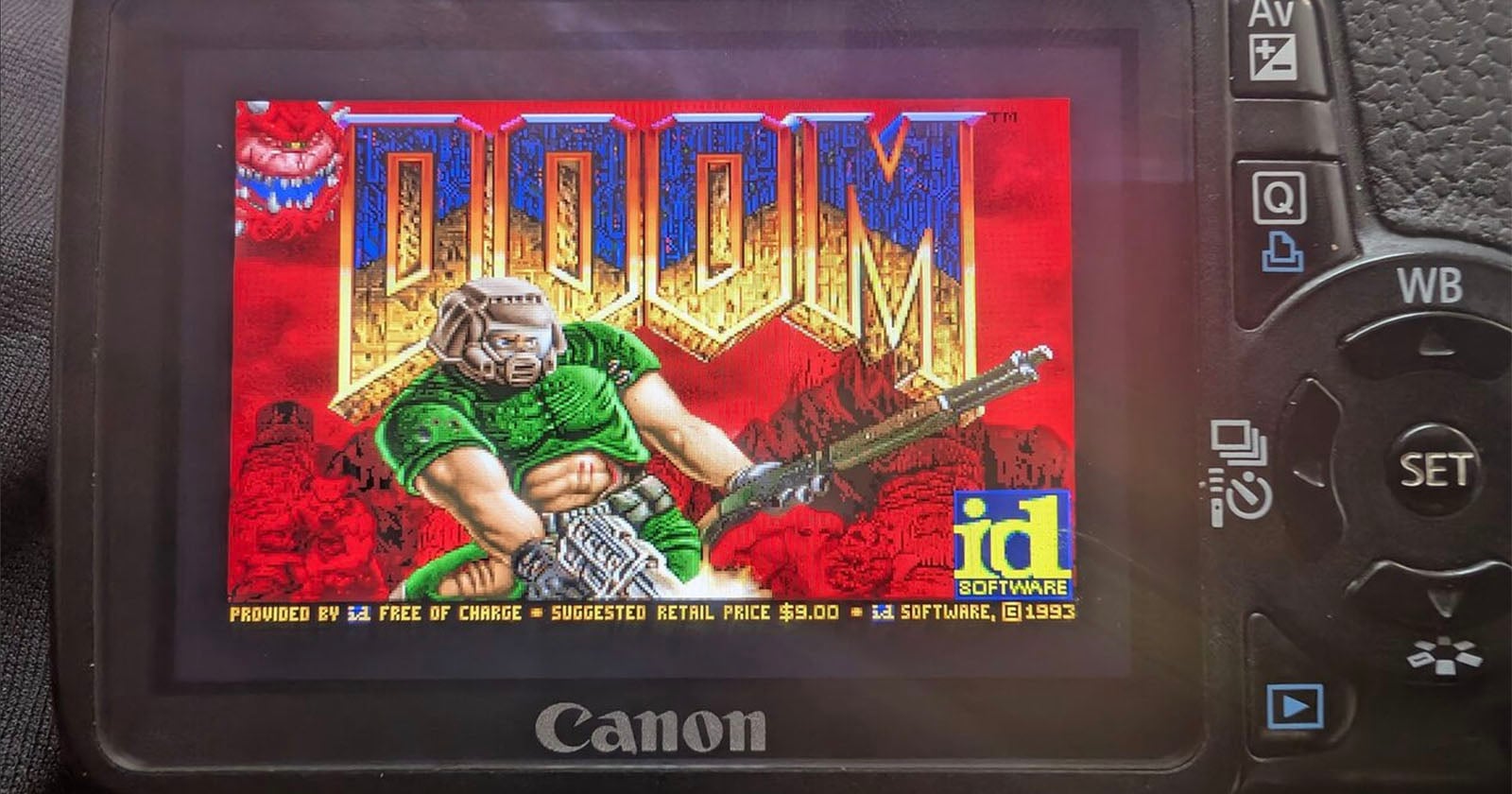
The enduring legacy of *Doom* extends far beyond its impact on the first-person shooter genre; it's become a testament to the ingenuity of programmers and the boundless possibilities of repurposing technology. The recent demonstration of *Doom* running on a 16-year-old Canon DSLR, facilitated by the Magic Lantern software, is a delightful encapsulation of this spirit. It's a playful exploration of hardware limitations and a vibrant reminder that creative coding can breathe new life into unexpected platforms. This echoes a broader trend we've seen in the photography world, as evidenced by discussions around the capabilities of older cameras; as explored in [Old Samsung Cameras Weren’t So Bad. Their RAW Files Just Sucked], limitations often lie not in the core hardware, but in the software and processing pipelines that define the user experience. The ability to transform a photographic tool into a retro gaming console highlights a fascinating intersection of creative expression and technological adaptation, a concept further underscored by the insights shared in [6 Street Photography Tips Pros Shared With Us in an Interview], which demonstrates how photographers themselves find innovative uses for their equipment.
The technical achievement itself is noteworthy. Magic Lantern, a community-driven project, has consistently pushed the boundaries of what Canon DSLRs can do, offering custom firmware that unlocks features far beyond the manufacturer’s original intentions. This is more than just a quirky novelty; it speaks to a deeper desire for control and customization within the creative community. It's a rejection of the walled-garden approach often employed by tech companies and an embrace of open-source innovation. The fact that *Doom*, a game notoriously demanding for its time, can be rendered on a device primarily designed for capturing still images is a testament to the efficiency of the game’s code and the cleverness of the Magic Lantern developers. The simple act of playing a classic game on a camera underscores a broader point – technology is often far more adaptable than we initially perceive.
Beyond the technical and the playful, this development invites us to reconsider our relationship with technology and its perceived obsolescence. We live in an era of rapid technological advancement, where devices are routinely replaced with newer, faster models. Yet, this demonstration reminds us that older hardware can still offer surprising capabilities, particularly when coupled with creative software solutions. It’s a counterpoint to the relentless cycle of consumerism and a subtle encouragement to explore the hidden potential within the devices we already own. It also raises interesting questions about the future of embedded systems and the possibility of transforming everyday devices into unexpected platforms for entertainment and creativity, a possibility foreshadowed by the early explorations of integrating new functionalities, such as cameras, into devices like AirPods, as demonstrated in [Camera-Equipped AirPods Shown In Action in macOS Beta].
Ultimately, the *Doom* on a DSLR story is a charming reminder of the enduring power of ingenuity and the boundless potential of creative exploration. It’s a celebration of the hacker spirit and a testament to the human desire to push boundaries, even within the confines of seemingly limited hardware. As technology continues to evolve at an accelerating pace, it will be fascinating to observe how creative coders and communities continue to find innovative and unexpected ways to repurpose existing devices, blurring the lines between functionality and entertainment and challenging our assumptions about what technology can do. What other seemingly mundane devices might harbor the potential to become unexpected gaming platforms, and what new software solutions will unlock those capabilities?
It's possible to run the pioneering 1993 first-person shooter video game Doom on just about anything, even cameras. By using Magic Lantern software on a Canon EOS 550D from 2010, also known as the EOS Rebel T2i and EOS Kiss X4, photographers can install a custom build of Doom on their APS-C cameras.
Read on the original site
Open the publisher's page for the full experience