A Commercial Photographer’s Take on When to Use AI (and When Not To)
Our take
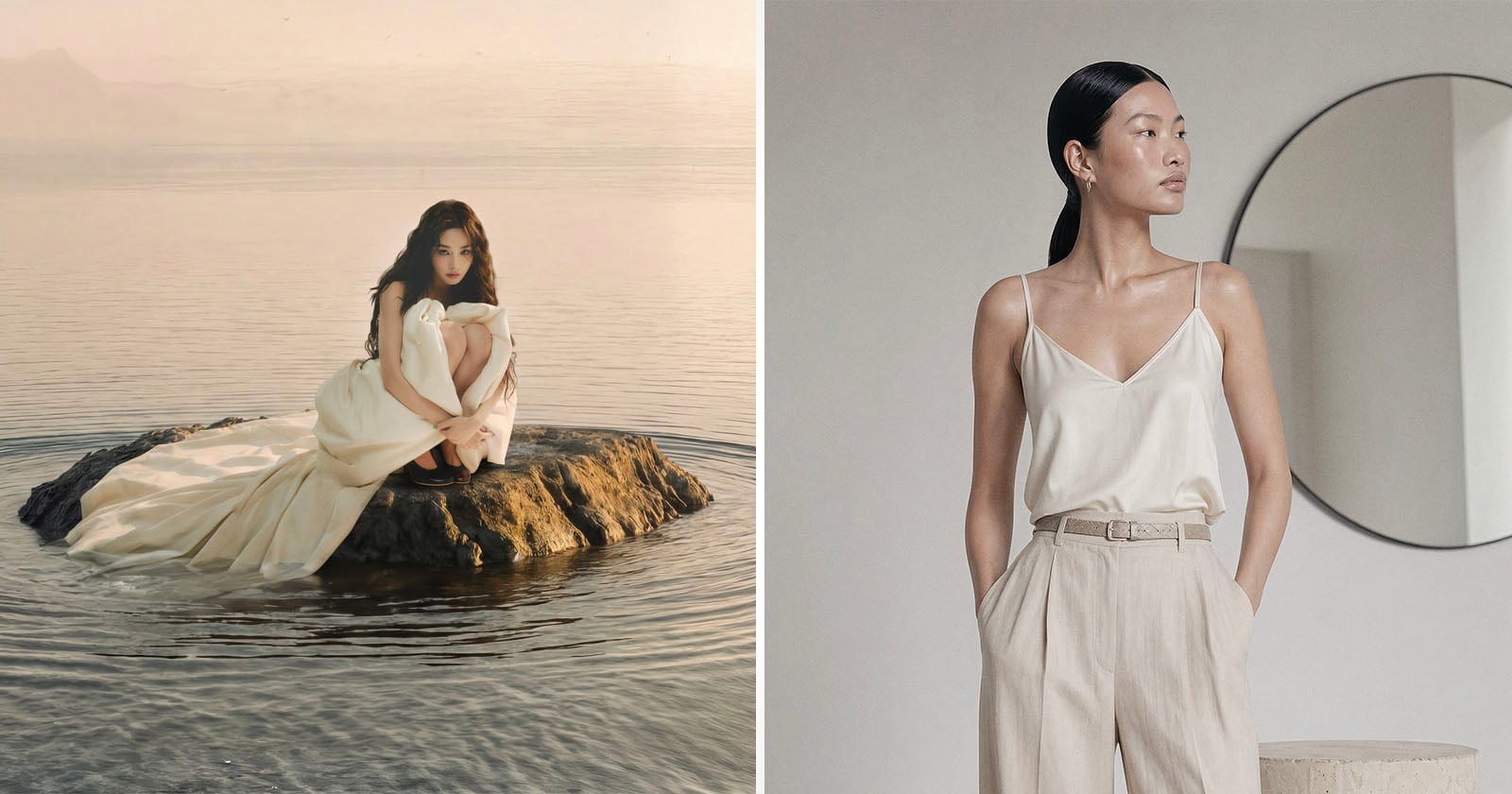
The tension between authenticity and efficiency has always lived at the heart of creative work, but rarely has it felt so acutely present as in this moment of rapid AI evolution. The commercial photographer's decision to transform simple phone captures into polished lookbook imagery without a traditional shoot represents far more than a practical accommodation; it signals a fundamental recalibration of what we value in visual storytelling. As explored in recent industry discussions, [Photographers Raise Concerns as AI Use Surges Among Clients](), the profession finds itself at a crossroads where technological capability and creative integrity collide. Yet this story offers something more nuanced than the familiar narrative of artists versus algorithms.
What makes this reflection particularly compelling is its refusal to reduce the AI question to a binary. The photographer didn't simply embrace the technology or reject it; they engaged with it thoughtfully, recognizing that different briefs demand different approaches. [Most Surveyed Photographers Use AI for Tedious Tasks, Not Creative Editing](), which suggests the industry is already moving toward a selective, strategic integration rather than wholesale replacement. This measured perspective cuts through the noise of both technophobic hand-wringing and breathless futurism, grounding the conversation in the actual complexities of professional practice.
The deeper question lurking beneath this anecdote concerns the nature of creative authority itself. When a client asks for professional polish without a traditional shoot, they're essentially requesting that the photographer's role transform from documentarian to alchemy—transforming the ordinary into the exceptional through expertise alone. This places the creative professional in an intriguing position: less a capturer of moments and more a curator of perception. [Photography is losing its heart. When everyone becomes an "AI Curator," who is left to be the witness?](), one recent examination asked, and the question lingers here. The photographer's acceptance of the brief wasn't just a business decision; it was an implicit acknowledgment that the role of the visual professional is evolving beyond pure technique into something more conceptual.
Yet there's an important distinction worth preserving between adaptation and surrender. What distinguishes this photographer's approach from simple automation is the underlying sensibility—the curated eye that understands how light should fall, how composition should feel, how an image should ultimately resonate. AI becomes a powerful tool in capable hands precisely because those hands still provide the intention, the direction, the taste that no algorithm can manufacture from scratch. The danger lies not in using AI but in allowing it to replace the cultivation of those uniquely human creative sensibilities.
As we look ahead, the photographers who will thrive are those who view AI as an extension of their creative toolkit rather than a replacement for their creative judgment. The question isn't whether to use these tools but how to wield them in service of authentic vision—transforming efficiency into elegance without sacrificing the intentionality that makes imagery meaningful. The future belongs to those who can navigate this balance with both artistic integrity and practical wisdom.
Last year, a client came to me with a straightforward brief: they needed a full lookbook for their new clothing line. But there was a catch. “We don’t want a shoot,” they said. “Just take our phone photos and make them look professional with AI.” I could have said no. Instead, I said yes -- and it changed how I think about my entire career.
Read on the original site
Open the publisher's page for the full experience
Related Articles
- Photographers Raise Concerns as AI Use Surges Among ClientsAre photographers competing against AI? It's a question posed by a recent Vogue article after photographer Jack Davison questioned his Instagram followers on whether it is increasingly becoming an issue. [Read More]
- Most Surveyed Photographers Use AI for Tedious Tasks, Not Creative EditingAI in photography is a hot topic. It can range from a purely workflow tool to a portrait retoucher and even a full-blown creation tool. According to a survey of 363 photographers who either use AI as part of their workflow or are open to AI retouching tools, the vast majority believe AI should assist but not take over creative control. [Read More]
- Photography is losing its heart. When everyone becomes an “AI Curator,” who is left to be the witness?I’ve been thinking a lot lately about the future of photography and where we’re heading as AI continues to advance, and it has brought me to a somewhat grim realization about the future of this beautiful craft. For over a century, photography was the language of witnessing. It was a physical, nervous-system response to a moment. But today, that language feels at risk of being replaced by a heavy digital dialect of AI synthesis and prompts. We are moving from the era of the Mechanic to the era of the Consumer, and we’re being told it’s "progress", that we’ve somehow won. I think at some point we’ll enter a world of so called "AI-powered idiot cameras" - machines designed to remove every bit of friction from the process through AI. Some people celebrate this, saying it "democratizes" art. But friction is what builds the muscle. We are probably heading toward a world where the camera handles the exposure, the focus, and even the 'vibe' through an AI prompt from the camera's menu. I’m not just thinking about AI as a separate tool you sit and prompt, but about it becoming an integrated part of the camera itself, shaping decisions in real time as you shoot. In that future, people aren’t creators anymore, they are just managers of an algorithm built into the next generation of AI-driven cameras, embedded as an AI feature directly in the camera’s menu. Suddenly, everyone will feel like a "photographer" because they can take a mediocre shot and tell the Nikon AI, Sony AI or any other camera's AI: "Make this look professional". They aren’t learning how to see light, they’re learning how to prompt a simulation. We are facing a paradox where, because of AI, 90% of people might start believing they are “Five-Star Chefs.” But they aren’t in the kitchen, they’re just pressing buttons on a high-end microwave. When “amazing” becomes the baseline that anyone can achieve in seconds, even at home, “amazing” becomes boring. When everyone can produce a “masterpiece” without effort, the title of Photographer is stripped of its authority. If the world is about to be flooded with “perfect” images, we won’t be creating a culture of artists anymore, but rather a desert of meaning where nothing stands out because nothing was earned, just a kind of "perfect chaos". We’re likely heading toward a future of AI-generated poses, lighting, backgrounds swapped on the fly, and “perfect” facial expressions that never actually happened, features that could become part of the next generation of AI-driven cameras in their menus. A future where the person doesn’t even have to be there in the moment, where entire scenes can be constructed after the fact, and where a single frame can be endlessly re-lit, re-angled, and re-composed without ever returning to reality. Where eyes can be adjusted, emotions fine-tuned, and “the perfect shot” is no longer captured, but assembled. If you didn’t physically choose the aperture to control the blur, or fight the shadows to save the highlights, you didn’t author the shot, you just curated a possibility. When a machine can generate a thousand "perfect" options instantly, choosing one doesn’t feel like authorship anymore. It feels like browsing. “Intentionality” is becoming a luxury tax that clients won’t want to pay anymore. Why hire a “Master of the Craft” who takes all day to find the perfect light when you can hire a regular person as an “AI Curator” who generates a “statistically perfect” result in ten minutes for a fraction of the cost? The “Master” isn’t becoming more distinct, they are becoming unemployed. Most photography today lives in the middle: portraits, events, products. If that layer gets replaced by AI, where do future professionals even come from? What also worries me is not just the tools, but the audience. If people grow up looking at AI-perfect images every day, will they even be able to recognize real craftsmanship anymore? Or will anything imperfect just look like a mistake or noise? Also, there’s a difference between capturing a moment and generating something that looks like one. One is a trace of reality. The other is a probability. But where does this end? Are we watching photography become a “dead language,” a niche skill spoken only by a tiny minority of purists, while the rest of the world settles for the simulation? When the “mass layer” of images is entirely synthetic and engagement-optimized, does the human witness even matter anymore, or are we just museum curators guarding a flame the world has forgotten how to see? I’m not saying I’m right, or that progress is “evil.” I’m just a mechanic wondering if we’re losing the engine in exchange for a smoother ride because that’s how it feels to me right now. Curious how others see this. submitted by /u/atlantis_zenit [link] [comments]
- Do you think more "natural" editing will be in demand due to the influx of AI?Recently saw some professional photos someone had posted and I know they didn't use AI to process the faces, but the faces gave the same kind of vibes as AI. I also see similarities when the photo has the saturation dialed up or things just look too smooth. I had the thought that if I was paying for someone to take photos of my family, I would not be happy with them looking like that, even though I know that it's a stylistic thing and the photos would be considered good in most groups. Has anyone experienced clients asking for less processing or seen people taking more of their own photos and relying less on professional photography services due to AI? submitted by /u/x_Caffeine_Kitten_x [link] [comments]