Kylie Jenner’s Meta Smart Glasses Parodied in Guerrilla Lenticular Ad
Our take
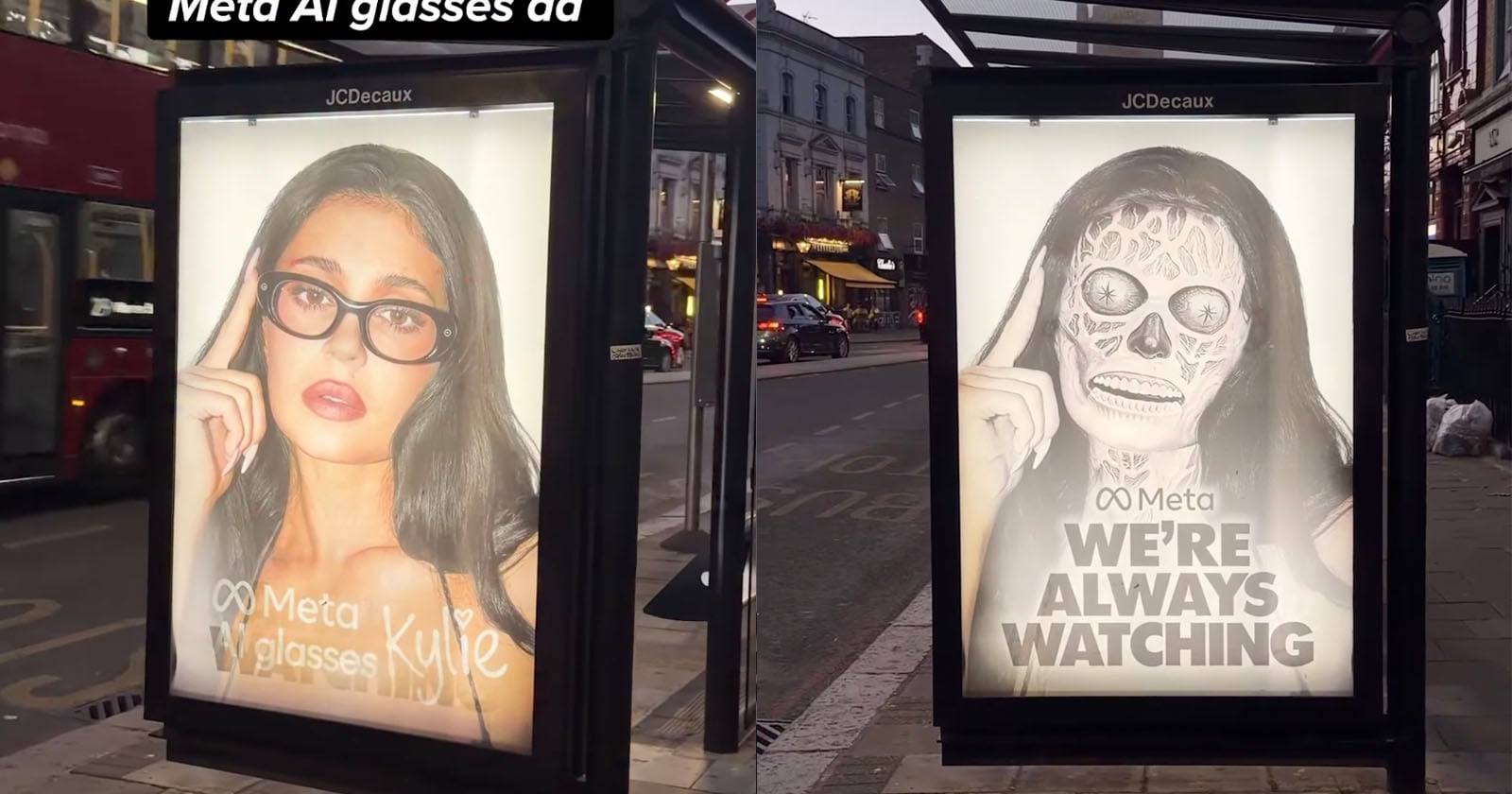
The recent guerrilla marketing campaign targeting Meta’s AI smart glasses, manifested in a striking lenticular billboard parodying Kylie Jenner’s endorsement, speaks volumes about the growing unease surrounding pervasive data collection and the blurring lines between augmented reality and surveillance. The image – a split display showing Jenner’s promotional image juxtaposed with a digitally altered version featuring skull makeup and the stark message "Meta WE'RE ALWAYS WATCHING" – is undeniably provocative and effectively captures the anxieties many feel about the unchecked advancement of AI-powered devices. This isn’t simply a critique of Meta; it’s a broader commentary on the normalization of constant monitoring and the potential for these technologies to erode privacy. The timing is particularly notable, coming on the heels of reports like [Conversations Between Apple Store Workers and Customers Can Now Be Recorded], which highlight the expanding scope of data capture within even ostensibly consumer-friendly environments, and mirroring the concerns raised by incidents such as the [San Francisco Restaurant Defaced Over AI-Generated Food Photos], demonstrating a palpable backlash against increasingly sophisticated AI applications.
The choice of London as the location for this campaign is also strategic, reflecting a strong cultural and legal emphasis on privacy within the UK and Europe. This act of subversion underscores the limitations of traditional advertising and the power of grassroots movements to challenge corporate narratives. Meta’s foray into smart glasses, positioning them as sleek and seamlessly integrated lifestyle accessories, has clearly resonated with some as a more insidious form of data extraction. The Jenner endorsement, leveraging the influencer's immense popularity, further amplifies the sense that these technologies are being deliberately woven into the fabric of popular culture, potentially obscuring their implications. Furthermore, the broader geopolitical context surrounding AI development, particularly the escalating concerns about [The US is Concerned Over ‘IP Theft’ by Chinese AI Labs], adds another layer to the discussion. The anxieties aren’t solely about personal privacy but also about national security and the potential for technological dominance.
Beyond the immediate spectacle, this incident highlights a crucial shift in consumer perception. The initial excitement surrounding augmented reality and AI has been tempered by a growing awareness of the potential downsides – the loss of privacy, the spread of misinformation, and the potential for algorithmic bias. This isn't about rejecting technology outright; it’s about demanding greater transparency and accountability from the companies developing and deploying it. The guerilla campaign’s viral spread demonstrates that consumers are increasingly willing to engage in direct action and publicly challenge brands that they perceive as prioritizing profit over ethical considerations. The lenticular ad, by its very nature, forces viewers to confront the duality of the technology – the glossy, aspirational image versus the unsettling reality of constant surveillance.
Ultimately, the Meta smart glasses protest serves as a potent reminder that technological innovation doesn’t exist in a vacuum. It operates within a complex social, political, and ethical landscape, and its impact is shaped by public perception and regulatory frameworks. The question now is whether corporations will proactively address these concerns and prioritize user privacy and ethical considerations, or if they will continue to push the boundaries of data collection and augmented reality, risking further public backlash and regulatory scrutiny. The success of this particular campaign, and the wider climate of growing skepticism towards AI, suggests that a more cautious and transparent approach will be essential for the long-term viability of these technologies.
An activist group has created a spoof billboard ad on a London bus stop, taking aim at Meta's AI smart glasses.
Read on the original site
Open the publisher's page for the full experience