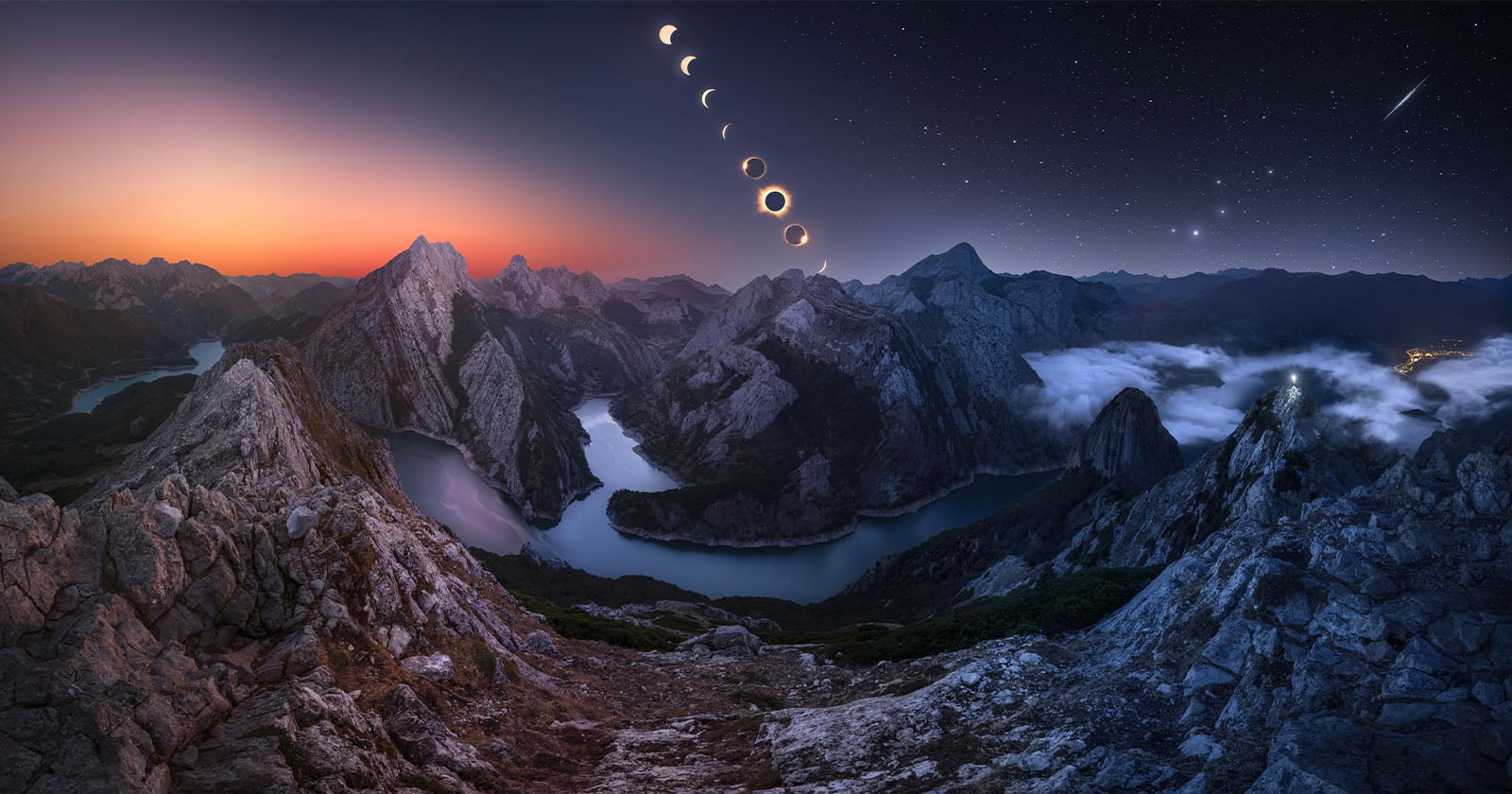
Angel Fux spent two years chasing a single frame, and the result is a reminder that photography at its highest level is not about being at the right place at the right time. It is about refusing to let go of a vision until the world bends to meet it. Her composite of the total solar eclipse over Spain's winding river valley, with jagged peaks catching the twilight, is masterful not because it documents an event but because it distills the feeling of standing inside a moment that will not come again. We think that is the difference between taking a picture and making one, and it is a distinction worth holding onto as the industry floods with instant captures and reactive content.
This story lands in sharp contrast to the recent When a brand calls cut on candid beauty, where a viral image was pulled because a brand wanted control over its own narrative. Fux's work is the opposite: she controlled every variable for two years, not to sanitize the scene but to honor its complexity. It also speaks to the patience we explored in The Art of Detail: When Extra Bit Depth Transforms Your Image, where the technical choices in post-production are not about gimmickry but about preserving the depth of what the eye saw. And in an era where the line between art and offense becomes a jail cell can be drawn by a stranger online, Fux's dedication feels almost radical: she answered only to the sky, not to an algorithm or a comment thread.
What does this mean for you, the working photographer or the devoted enthusiast? It means the pressure to be first, to post now, to move on to the next thing, is a trap. Fux's image is a quiet rebuke to the idea that relevance is measured in hours. She did not chase the eclipse; she prepared for it, studied it, dreamed it into existence until the weather, the light, and the landscape aligned. That is not luck. That is a practice. And it is one you can adopt even in smaller ways: spend a week returning to the same street corner, the same portrait setup, the same still life, and see what emerges when you stop hunting and start waiting.
The takeaway is direct: your next great image is probably not the one you will capture on the first try, or the tenth. It is the one you keep coming back to because you know it can be more than a record. Fux had to wait two years for a few minutes of totality, but the image she made will outlast every breaking news alert from that day. The question we are left with is not whether she was lucky, but what you are willing to wait for when no one is watching. That is the edge that separates a photograph from a shadow, and it is the only one that matters.